LIGHT-BASED WEAPONS (FLASHBANGS AND AERIAL TACTICAL SPOTLIGHTS)
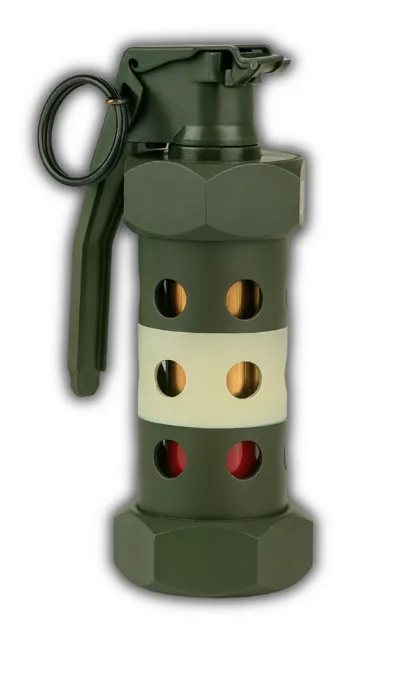
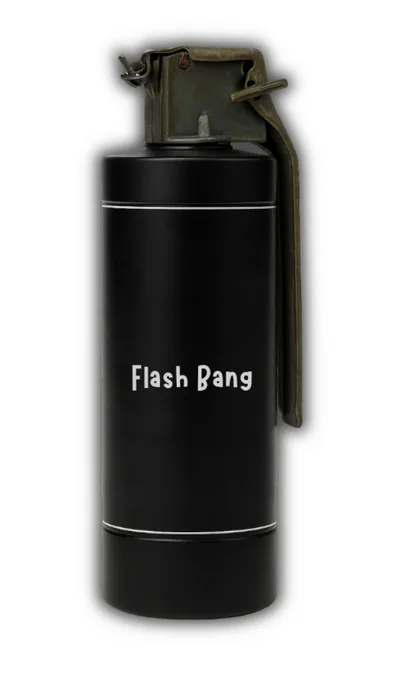
Light-based weapons bring together technologies designed to instantly impair visual and cognitive capacity through the controlled emission of extreme light. This group includes ground devices such as flashbangs which produce high-intensity flashes within milliseconds and also systems mounted on aircraft and tactical vehicles, equipped with long-range spotlights capable of saturating the retina from considerable distances.
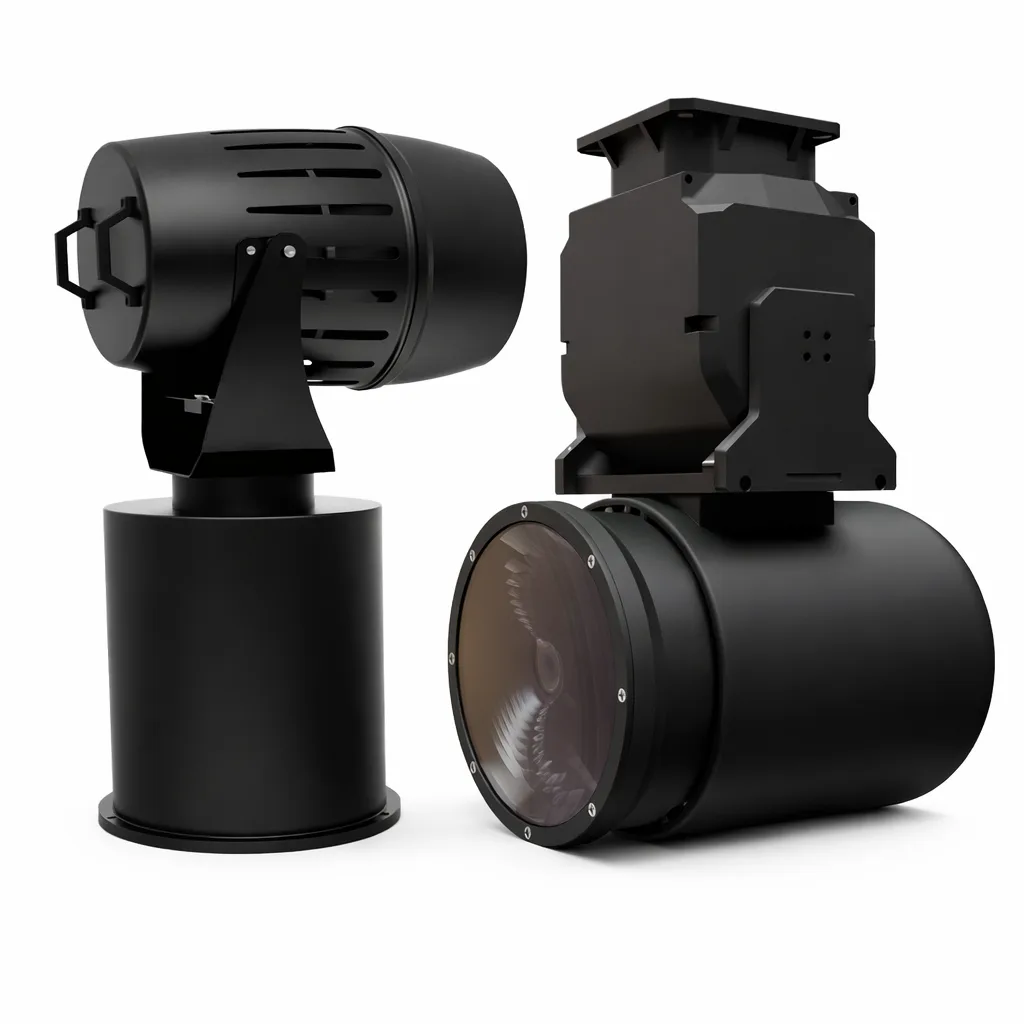
These tactical spotlights, used in aerial operations, employ concentrated light beams that can disorient, block night vision and alter perception of the surroundings.
Their operation relies on powerful precision LED or halogen lamps, gyroscopic stabilizers and steerable focusing mechanisms that allow intense illumination to be projected onto specific targets for extended periods.
Combined, these devices represent a family of tools that turns light energy into an effective mechanism of sensory disruption. Exploring this category provides insight into how beam intensity, beam direction, system stability and short exposure times determine the real impact of light-based weapons in contemporary operational scenarios.
| Category | Technical specification |
|---|---|
| Device type | Non-lethal light-based weapons: stun grenades and high-intensity LED spotlight systems. |
| Activation mode | Delay fuze (1–2.5 s) or instant-on electronic switch in LED devices. |
| Composition of the effect |
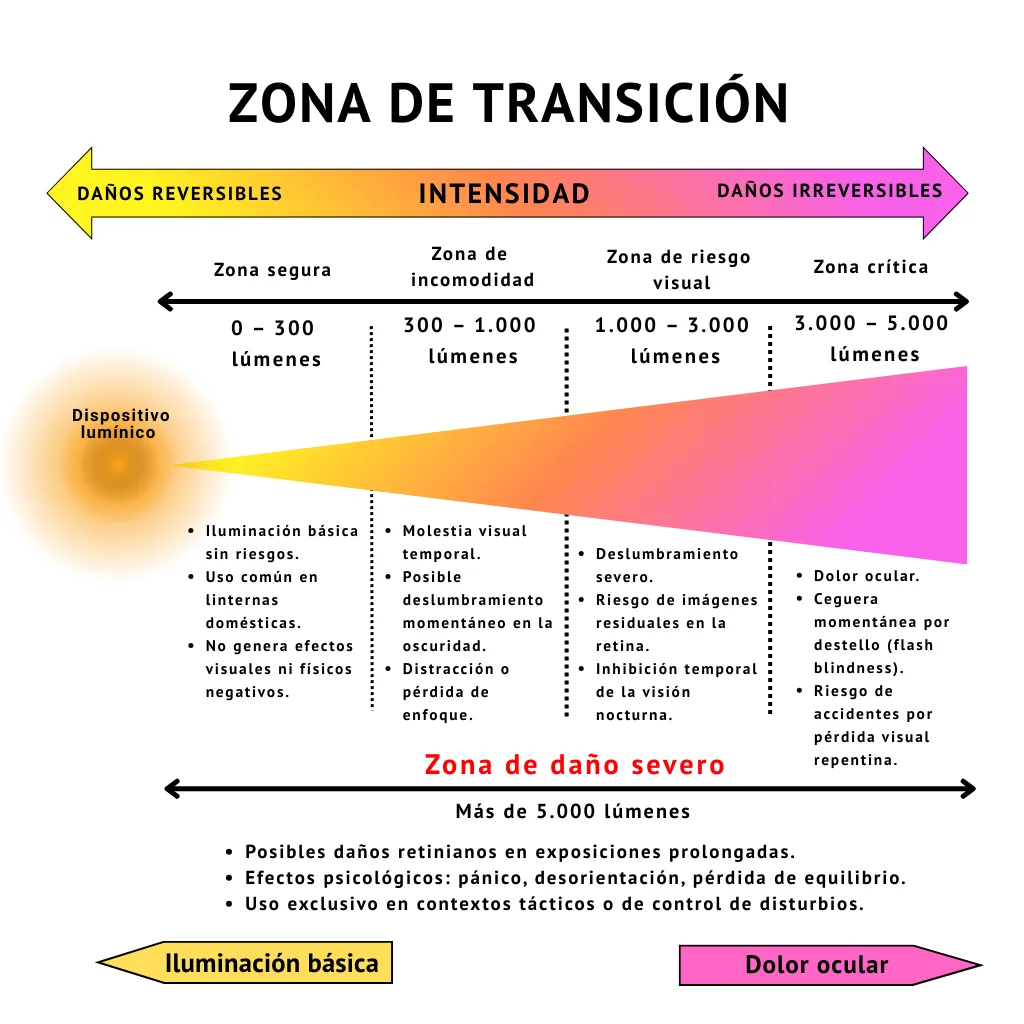
• Grenades: pyrotechnic flash >4 million candela in flashbangs + sound pulse (140–170 dB). • LED spotlights: concentrated light beam with intensity of up to 30,000 lumens. |
| Main light source |
• High-performance LED, cool white light (6000–6500 K). • Specialized optics for long range and visual disorientation. • Example: 30,000 lm LED Kit. |
| Power source | High-capacity rechargeable batteries or external 12V/24V supply for continuous tactical use. |
| Body materials | Reinforced polymers or aluminum; design resistant to heat, impacts and environmental conditions (IP65 or higher). |
| Safety and handling | Grenades with safety systems and pull ring; lights with protected switches and a housing with thermal dissipation. |
| Operational applications | Riot control, night operations, tactical entries, visual/auditory disorientation and strategic signaling. |
Design, Use and Omission Light-based weapons particularly those that use strobe flashes, intense white light or blinding pulses have been increasingly integrated into crowd-control arsenals, in urban contexts as well as in prisons and the military. Their mechanism of action is based on visual bombardment, that is, the abrupt and repetitive emission of high-intensity light beams that cause temporary blindness, disorientation, sensory imbalance, loss of balance, nausea, and neuromotor collapse, especially in darkness or in enclosed spaces. Although these devices are presented as instruments to immobilize or control without physical contact, their documented effects and disproportionate use have shown that they also constitute forms of visual and neurosensory aggression with serious consequences for human health. By technical design, strobe light-based weapons are intended to emit between 8 and 15 light pulses per second, with intensities exceeding 10,000 lumens and wavelengths aggressive to the human ocular system.
This type of light strikes the retina directly, saturates the rods and cones of the eye and interferes with the brain’s visual processing, causing effects such as flash blindness (temporary blindness from retinal saturation), loss of peripheral vision, dizziness, and neurophysiological effects similar to those experienced in photosensitive epileptic seizures. In individuals with preexisting neurological or visual conditions, this class of stimuli can trigger seizures, fainting or permanent retinal damage. In some cases, such as those reported in police interventions in the United States, France, Israel or Russia, these devices have been combined with intense sounds and chemical smoke, increasing their incapacitating capacity without leaving visible physical traces. In terms of operational use, strobe devices have been employed in protests, urban raids, home searches and prison settings on the argument of neutralizing people without physical contact or projectiles. However, the problem lies in their indiscriminate use, at close range, and without medical or ethical consideration of the conditions of the environment and the characteristics of the target. In enclosed spaces, such as tunnels, dark rooms or vehicles, the use of strobe lights can cause collective panic attacks, accidents from disorientation and violent falls, especially when used simultaneously with blasts, smoke or confinement tactics.
The result is an environment of total sensory violence, in which victims lose their capacity for orientation, defense or escape. Added to this are reports of high-intensity lights deliberately aimed at the faces of demonstrators or camera operators, as a mechanism of intimidation, visual deactivation or censorship. Institutional omission regarding these weapons is alarming. Despite their growing adoption, in many countries there is no regulation that limits the maximum light intensity, the permitted pulse frequency or the maximum tolerable exposure per minute. No prior medical or neurological training is required for their operation, nor is there any follow-up of the people affected. Nor has the precautionary principle been incorporated with regard to vulnerable populations such as minors, people with epilepsy, pregnant women or older adults. This lack of technical and medical regulation has been exploited by security forces to adopt these technologies without accountability for their effects, in a kind of legal “gray zone” where sensory aggression falls outside the traditional frameworks governing the use of force.
All of this reinforces the concept of false less-lethality: light-based weapons produce no visible wounds or immediate traces, but they can cause profound incapacitating effects, and in many cases, invisible traumas that affect the central nervous system, sensory perception and emotional well-being. By leaving no bloody traces, these weapons allow the State to act with brutality without facing the same social or legal scrutiny that bullets or batons would entail. Nevertheless, as specialists in public health, neuroscience and human rights have warned, this kind of “contactless” violence can prove equally or more traumatic in the long term, especially when used for punitive, intimidating or repressive purposes against peaceful demonstrators, marginalized communities or groups in resistance. In short, strobe and dazzling light-based weapons constitute a sophisticated form of technological violence that alters the senses, subdues bodies and destructures thought. Their supposed “non-lethal” character conceals an insidious violence that violates human dignity through light. Regulating them implies not only limiting their use but recognizing their true destructive power on the visual, neurological and symbolic levels, and moving toward transparent protocols, independent medical oversight and a ban in vulnerable contexts. Because to illuminate in order to blind is also a way of switching off rights.