DIRECTED ENERGY TECHNOLOGIES
Directed Energy Technologies (Heat Ray / ADS)
Directed energy technologies use millimeter-wave electromagnetic radiation to generate an immediate physiological response without physical contact. The most representative system, the Active Denial System (ADS), operates at 95 GHz and exploits the interaction of these waves with the superficial layers of the skin to produce an intense thermal sensation in fractions of a second.
Its operation integrates high-power magnetrons, directional antennas and stabilized platforms that make it possible to project a coherent beam over long distances with a high level of precision. This architecture converts electromagnetic energy into a tactical mechanism designed to modify the target’s behavior through the rapid activation of thermal receptors.
Exploring this category helps to understand how frequency, beam density and exposure time determine the real-world performance of directed energy weapons in perimeter control operations.
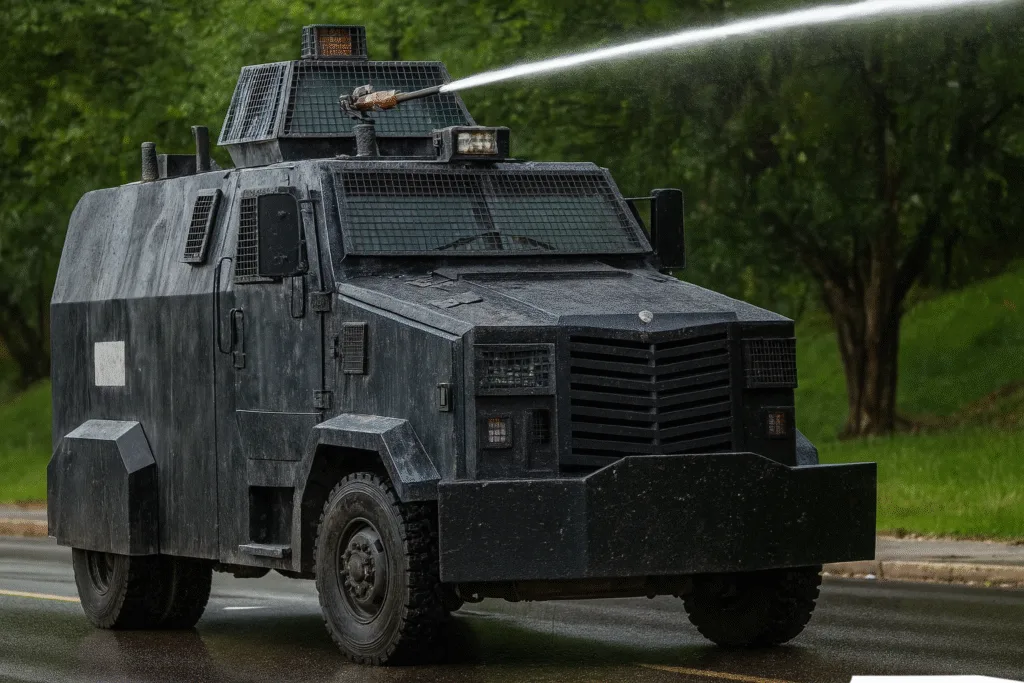
Hydraulic Weapons (Water Cannons)
Water cannons use high-pressure hydraulic systems to project powerful jets capable of displacing, destabilizing or dispersing groups at a distance. Their operation is based on industrial pumps that generate pressures between 10 and 20 bar, propelling the fluid at velocities that allow control over range, emission pattern and impact on the target.
The technology incorporates adjustable nozzles, flow controls and modulation mechanisms that make it possible to alternate between concentrated jets, dispersal fans or intermittent pulses. These configurations adapt to different operational needs and determine the force exerted on the body when the jet makes contact.
Exploring this category helps to understand how fluid dynamics, hydraulic pressure and distance modify the behavior of water cannons within the contemporary arsenal of tactical control.

🔵 High-Pressure Water Cannon Directed Energy System
| Category | Technical specification |
|---|---|
| Operating system | Expel columns of water at very high pressure to disperse crowds and create physical barriers without projectiles. |
| Operating pressure | Between 10 and 30 bar (145–435 psi). |
| Effective range | Between 50 and 70 meters depending on nozzle and system power. |
| Discharge volume | Up to 1,200 liters per minute. |
| Energy transmitted | Kinetic energy generated by the impact of the water jet. |
| Operational applications | Riot control, dispersal at a distance and temporary incapacitation. |
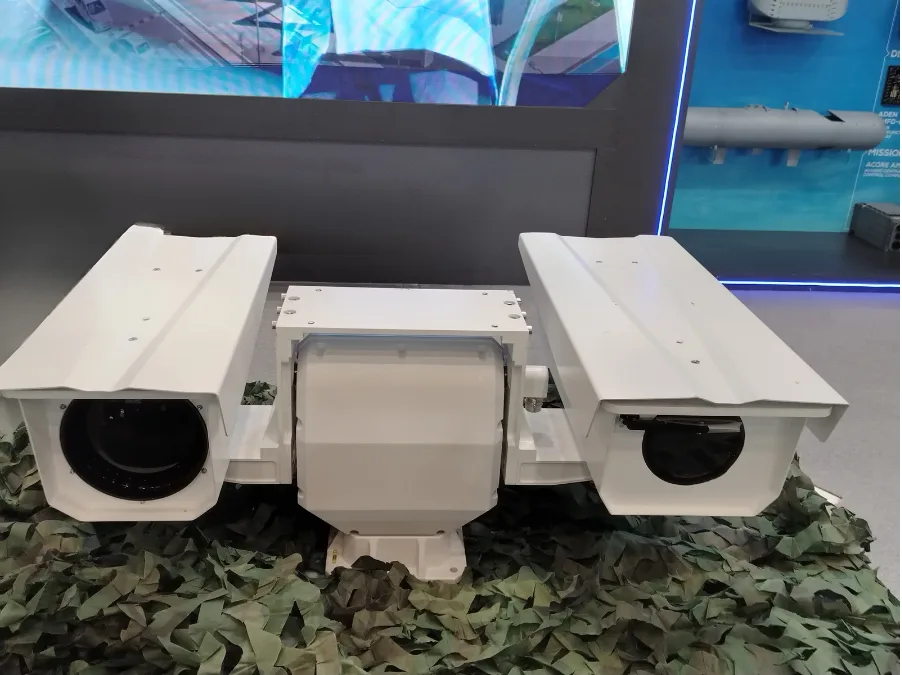
🔴 Microwave Directed Energy System (ADS)
| Category | Technical specification |
|---|---|
| Operating system | Emits high-frequency non-ionizing electromagnetic waves that produce an intense thermal sensation, forcing retreat without causing permanent damage. |
| Operating frequency | 95 GHz (military ADS standard). |
| Beam power | Up to 100 kW depending on manufacturer and desired range. |
| Type of energy | Non-ionizing electromagnetic. |
| Effective range | Up to 500 meters under optimal conditions. |
Design, Use and Omission Directed Energy Weapons (DEWs) represent one of the most advanced and controversial technologies within the arsenal of less-lethal weapons. They work by projecting concentrated beams of energy—such as microwaves, electromagnetic radiation, infrared or charged particles—to incapacitate, disperse or neutralize people and objects without resorting to physical projectiles. Although they are presented as “humanitarian alternatives” to bullets, batons or tear gas, various scientific studies and medical reports have shown that their physiological effects can be severe, lasting and even irreversible. One of the most worrying aspects is that these weapons generate invisible, silent harm. The projected energy leaves no immediate visible traces, hindering reporting, forensic documentation and the attribution of responsibility, which makes their use a particularly sophisticated form of state repression and covert social control. From a design standpoint, directed energy weapons are based on high-power emitters that generate heat, pressure or interference on sensitive tissues such as the skin, the eyes or the peripheral nervous system. Among the best-known devices is the Active Denial System (ADS), developed by the U.S. military, which emits 95 GHz millimeter waves capable of penetrating the skin up to 0.4 mm, causing an extreme burning sensation.
Although their manufacturers claim that the pain disappears once exposure ceases, it has been proven that it can cause second-degree burns, panic, physical collapse and disorientation, especially in vulnerable individuals or when used at close range. Other portable microwave devices used in urban control generate directed thermal impacts that can alter heart rate, cause intense headaches, tinnitus, body thermal dysregulation and extreme fatigue. These technologies fall into the category of directed-impact mechanisms, since they apply precise energy onto specific targets without direct physical contact, using thermal, acoustic or kinetic pressures to immobilize or disperse. This same category includes pressurized water cannons, commonly used by riot units. These devices fire water jets at pressures ranging between 10 and 30 bar (equivalent to 145–435 psi), capable of knocking a person down, causing contusions, fractures, cranial trauma or loss of balance, and even causing hypothermia if the water is cold or used for prolonged periods. Their innocuous appearance contrasts with the kinetic energy they generate, turning them into instruments of forceful physical impact that, when misused, can cause severe and persistent harm. Acoustic devices such as the LRAD (Long Range Acoustic Device) have also been documented, emitting directional sound waves exceeding 150 dB, capable of causing nausea, loss of balance and hearing damage. Likewise, rubber or foam projectiles fired from pneumatic devices act as forms of directed physical impact with high injury potential, especially when fired at close range or toward vital areas of the human body.
Likewise, rubber or foam projectiles fired from pneumatic devices act as forms of directed physical impact with high injury potential, especially when fired at close range or toward vital areas of the human body. The deployment of these technologies has advanced silently. Countries such as the United States, China, Russia and Israel have tested or deployed DEWs in prisons, at borders and during protests, without public transparency or civilian regulation. In some cases, collective effects similar to an “invisible wave of heat” have been documented, generating stampedes, loss of bodily control and panic attacks. The institutional omission regarding these weapons is alarming. Most countries lack specific regulations governing their use in civilian contexts, and those that exist are usually restricted to the military sphere. There are no medical protocols, independent audits or legal frameworks to control their application. Moreover, these devices are easily concealed and leave no clear material evidence, which prevents victims from proving the assault and fosters impunity. In this context, the narrative of “less-lethality” is misleading and dangerous. Although they do not produce visible bleeding wounds, directed energy weapons can cause deep and lasting harm: from burns, sensory disorders and neurological disorders to post-traumatic stress and physiological collapse. Their use conceals forms of invisible, technological and systematic violence that break down the body and the mind without leaving forensic traces, presented under the guise of legality and modernization.